
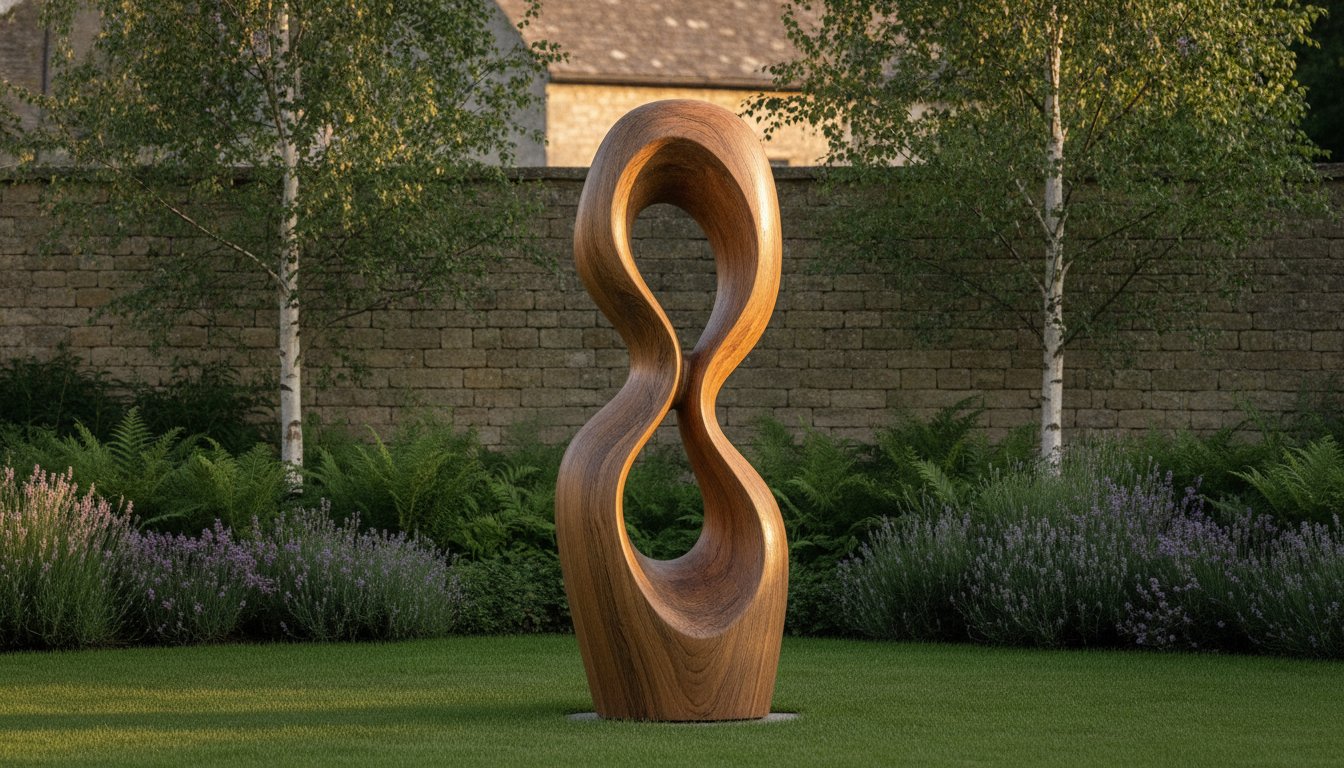
What if the most enduring feature of your garden wasn't a seasonal bloom, but a story carved from a fallen tree that once watched the seasons change for decades? Selecting a bespoke garden sculpture UK often feels like an uphill search for something that doesn't exist in a world of mass-produced, imported resin. You likely want a piece that reflects the wild, honest beauty of the British landscape whilst respecting the environment it sits within. It's common to feel hesitant about how timber might fare against our unpredictable rain or to worry about the ethical footprint of the materials used.
We believe that true art should be a dialogue between the maker, the material, and the land. In this case study, you'll discover how bespoke wooden sculptures can transform your outdoor space into a sanctuary of natural heritage and artisanal craftsmanship. We'll walk you through the tactile journey of commissioning a piece, from selecting sustainably sourced timber to understanding the natural oils that protect it. You'll gain a clear view of how a one-of-a-kind centrepiece becomes a legacy for your garden, rooted in integrity and the quiet rhythm of the forest.
Key Takeaways
- Learn how fallen timber is ethically reclaimed to create art that preserves the unique history of the British woodland.
- Understand the collaborative journey of commissioning a bespoke garden sculpture UK, ensuring the final piece resonates with your specific outdoor space.
- Explore why natural timber offers a soulful, sensory alternative to metal or stone, breathing and evolving alongside your garden through the years.
- Discover how the raw textures and growth rings of a tree dictate its final silhouette in a process that celebrates the material's natural journey.
- Follow a narrative walkthrough of a recent commission to see how raw timber is transformed into a handcrafted, sentimental heirloom.
Defining Bespoke Garden Sculpture in the UK
A bespoke garden sculpture UK represents a deep, site-specific dialogue between the landscape and the artisan. It's far more than a mere ornament placed upon the lawn; it's a collaborative work of art born from the unique topography, light, and history of a specific British garden. This process begins with an appreciation for the environment the piece will inhabit, ensuring the materials resonate with the surrounding flora. Choosing wood for these installations provides a tactile warmth that stone or metal simply cannot mirror. Timber feels alive; it carries the memory of the forest and responds to the moisture in our air, silvering gracefully as it ages.
The Value of a Unique Focal Point
A well-placed sculpture creates a destination within the landscape, drawing the eye and inviting you to pause in a specific corner of your sanctuary. When a piece is crafted specifically for you, it reflects your personal values and the heritage of the land. There's a profound emotional connection in knowing that the texture under your fingers was shaped by a human hand rather than a factory mould. This intimacy transforms a garden from a collection of plants into a curated narrative. It's about finding beauty in the organic imperfections that mass-produced items try to erase.
Sustainable Art: Why Provenance Matters
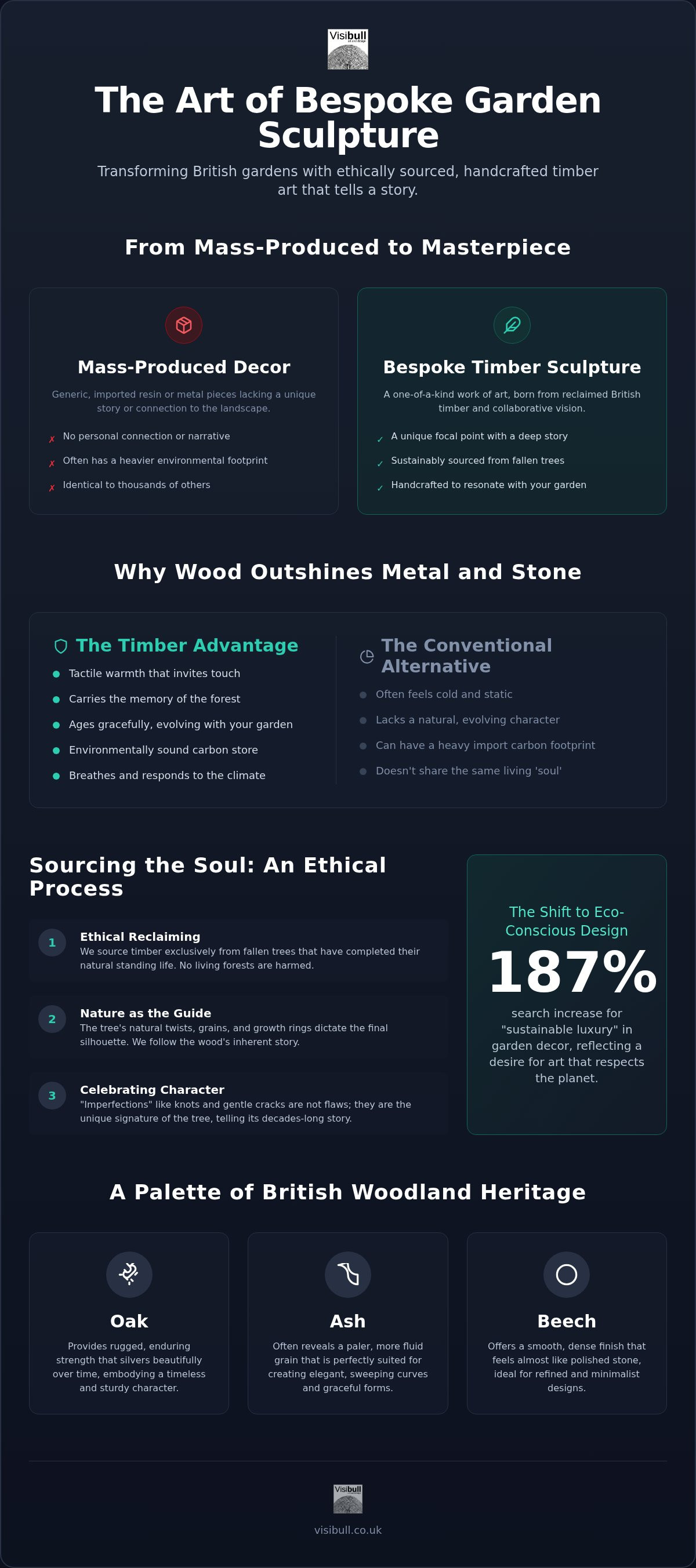
In 2026, the shift towards eco-conscious garden design has become a defining movement. Recent data shows a 187% search increase for "sustainable luxury" in garden decor, reflecting a growing desire for art that doesn't harm the planet. For us, this means looking closer to home and valuing the provenance of every log. We focus on giving new life to woodland giants by sourcing timber from fallen trees that have reached the end of their standing life. This approach avoids the heavy carbon footprint of imported stone or processed metals and supports the quiet tradition of independent UK craftsmanship.
Whilst some gardeners explore the concept of a living sculpture to blend art with growth, a piece of reclaimed timber art offers a similar ecological harmony. It acts as a bridge between the wild forest and the domestic garden. These sculptures are environmentally sound, acting as carbon stores whilst celebrating the raw elements of the earth. By choosing locally sourced timber, you're ensuring that your garden's centrepiece has a story rooted in integrity and renewal. It's a choice that respects the lifecycle of the material and the future of the landscape.
Sourcing the Soul: From Fallen Timber to Outdoor Art
Finding the heart of a piece begins long before the first chisel stroke. It starts in the quiet of the woods, identifying timber that has already finished its standing life. We look for fallen trees amongst the leaf litter, searching for specimens that possess a hidden vitality. This isn't about harvesting; it's about reclaiming. The natural twist of a branch or the swell of a trunk dictates the final silhouette of each bespoke garden sculpture UK. By following the grain, we honour the tree's history rather than imposing a foreign shape upon it.
Preparing these giants for the British climate is a methodical task. Freshly fallen wood is heavy with moisture, requiring a patient seasoning process to ensure it remains stable. Standards promoted by the British Woodworking Federation highlight the importance of understanding moisture content and material integrity in craftsmanship. We embrace the "imperfections" that occur during this drying phase. Knots, deep grains, and the gentle cracks known as checking are not flaws. They're the signature of the tree, telling a story of decades spent weathering storms and reaching for the sun.
Celebrating Woodland Heritage
The artist acts as a humble observer, letting nature's existing designs lead the way. In the UK, our native species offer a rich palette of textures and behaviours:
- Oak: Provides a rugged, enduring strength that silvers beautifully over time.
- Ash: Often reveals a paler, more fluid grain, perfect for sweeping curves.
- Beech: Offers a smooth, dense finish that feels almost like polished stone.
Sourcing these materials ethically means we never harm living forests. We simply wait for the earth to offer what it no longer needs to stand. This responsibility ensures that your art doesn't come at the cost of the environment you're trying to celebrate.
The Tactile Quality of Hand-Crafted Wood
There's a coldness to mass-produced metal that timber simply doesn't share. A hand-carved piece invites you to reach out and touch. You can feel the ridges of the growth rings and the warmth that wood retains even on a crisp autumn morning. The scent of seasoned timber and the way it dampens the sound of falling rain creates a sensory sanctuary. It encourages a slower, more deliberate way of being in your garden. When you choose to commission a garden sculpture from our studio, you're bringing a piece of this woodland soul into your home. Each curve is a reminder of the slow growth and resilience of the natural world.
Choosing Materials: Why Wood Outshines Metal and Stone
Metal and stone offer a sense of permanence, yet they often feel like intruders in a living, growing space. A bespoke garden sculpture UK crafted from timber acts as a soulful bridge between the wild forest and the cultivated garden. Whilst metal weathering is frequently just a layer of industrial oxidation, wood undergoes a biological evolution. It breathes, shifting slightly with the humidity of the British seasons. This organic movement isn't a failure of the material; it's a sign of its vitality. Timber remains warm to the touch even in the depths of winter, maintaining a sensory connection that cold steel or stone simply cannot replicate.
The environmental cost of art is a vital consideration for the modern gardener. Producing stainless steel or quarrying stone requires immense energy and heavy machinery, often leaving a significant carbon footprint. In contrast, timber art acts as a carbon store, locking away CO2 for the duration of its life. This sustainable philosophy is mirrored in Forestry England's Art Programme, where the lifecycle of the forest is celebrated through installations that respect the earth. By choosing wood, you're opting for a material that is born of the soil and, eventually, can return to it without harm.
The Aesthetic Evolution of Timber
Over time, untreated wood develops a distinguished silver-grey patina. This transformation isn't decay; it's a protective layer that allows the sculpture to settle into the soft landscaping of your garden. Unlike the harsh glare of new metal, natural wood garden sculptures UK harmonise with the shifting colours of the seasons. In a meadow or woodland setting, timber feels at home, its texture echoing the bark of nearby trees and the dappled light of the canopy. It becomes a quiet observer of the garden's growth, its appearance softening as it matures.
Maintenance and Longevity in the UK Climate
There's a common myth that wood is a temporary choice for the British weather. However, using dense hardwoods like oak or properly seasoned beech ensures your piece remains structurally sound for decades. Durability comes from a deep understanding of the grain and the application of natural oils that nourish the fibres without masking their raw beauty. Caring for your sculpture is a simple, rhythmic act of preservation that connects you further to the piece. It matures alongside your garden, becoming a heritage object that carries the marks of time with grace. Unlike stone, which can feel static and cold, wood remains tactile and inviting, a constant, warm presence amongst the greenery.
The Commission Journey: Bringing Your Vision to Life
Commissioning a bespoke garden sculpture UK is a deeply personal venture that begins with a simple, grounded conversation. We don't start with catalogues; we start with your garden's story and the emotions you want the space to evoke. This initial dialogue explores your inspirations, perhaps a favourite woodland walk or a particular memory, whilst also considering the physical opportunities of your landscape. It's a period of discovery where we listen to the wind in your trees and watch how the light falls amongst the greenery. This stage ensures the final piece isn't just placed in the garden but is born from it.
Once the vision begins to take shape, we move to the most vital step: selecting the material. We invite you to help choose the specific piece of timber that will form the heart of the sculpture. Each log has its own grain pattern, knots, and history, as we explored in our sourcing process. Balancing your desires with the natural dictates of the wood ensures the final piece feels organic rather than forced. The execution is then a slow, methodical dance of hand-crafting, where every shave of the chisel is deliberate and respectful of the material's integrity.
Collaborative Storytelling through Art
We believe in inviting you into the creative process. Whether through virtual updates or physical workshop visits, you'll see the raw timber slowly transform. This collaborative storytelling allows us to incorporate personal symbols or specific woodland themes that hold meaning for you. It's rewarding to witness the transition from a weather-worn log to a refined work of art. This shared journey ensures the finished sculpture isn't just an object you've bought, but a story you've helped to tell. If you're ready to begin this process, you can start your commission journey with us today.
Installation and Placement Strategy
The final chapter is identifying the perfect centre for the piece to command attention. Placement is an art in itself. We consider light and shadow, ensuring the sculpture's texture is highlighted by the sun throughout the day. Sightlines from your favourite window or garden bench are crucial; the piece should feel like it has always belonged there. Safety and security are paramount, so we ensure the sculpture is positioned to withstand the elements for years to come. By thinking about how your bespoke garden sculpture UK interacts with its surroundings, we create a focal point that breathes amongst the flora.
Visibull’s Signature Sculptures: A Case Study in Organic Design
A recent bespoke garden sculpture UK began its journey as a storm-felled oak that had rested for years in a quiet woodland. When we first encountered the log, it was weathered and grey, yet beneath the surface lay a vibrant history. The primary technical challenge with timber of this scale is managing its immense weight whilst respecting its structural integrity. Working with large-scale natural timber isn't a task for the hurried; it requires a patient understanding of how the wood will react to each cut. We spent weeks slowly removing the outer layers to reveal the dense, honey-coloured heartwood that had been protected for decades.
The unique ring patterns of the wood became our primary guide. These growth rings weren't just decorative; they influenced the final silhouette of the piece. By following the natural curvature of the grain, we created a form that felt like it was still reaching towards the canopy. This methodical approach ensures the final result is a centrepiece that bridges the gap between art and nature. It doesn't compete with the surrounding trees; instead, it honours them. The finished sculpture now stands as a testament to the tree's endurance, providing a tactile, grounding presence in a domestic sanctuary.
From Forest Floor to Garden Sanctuary
Tracing the history of this specific tree allowed us to share its story with the client. We could see periods of rapid growth and years of hardship etched into the wood's natural geometry. These details transformed the sculpture from a simple object into a sentimental heirloom. The client's reaction upon seeing the finished piece was one of quiet awe. They felt a deep connection to the material's origin, appreciating how the "imperfections" we discussed earlier had become the sculpture's most beautiful features. It's a reminder that beauty often lies in the lived experience of the material.
Extending the Narrative Indoors
Nature-inspired interior decor can create a wonderful synergy with tree ring art prints UK inside the home. This connection establishes a consistent aesthetic of sustainable woodcraft that flows from the garden into your living space. When you commission a bespoke garden sculpture UK, you're investing in a legacy that resonates throughout your entire property. It's a way of surrounding yourself with the slow, deliberate rhythm of the natural world, ensuring that the soul of the forest is present in every corner of your life. This holistic approach ensures that your home and garden tell a single, unified story of environmental reverence.
Rooting Your Landscape in Artisanal Heritage
Choosing a bespoke garden sculpture UK is an invitation to slow down and appreciate the quiet history of the British woodland. We've explored how fallen timber, once destined to decay on the forest floor, can be reclaimed and transformed into a sensory focal point that breathes alongside your garden. These pieces aren't just ornaments; they're one-of-a-kind heritage pieces that tell a story of resilience and renewal. By opting for timber over energy-intensive metal or stone, you're making a conscious choice for the environment whilst investing in the integrity of traditional craftsmanship.
Every curve and grain pattern in our work is hand-crafted by a dedicated UK artisan, ensuring that your commission is as unique as the tree it came from. This collaborative journey turns a simple outdoor space into a sanctuary of natural art. Whether you're looking to anchor a wild meadow or add a tactile element to a formal garden, the result is a sentimental heirloom that matures with grace. It's about finding beauty in the reclaimed and honouring the lifecycle of the forest.
Begin your commission journey with Visibull Art and Design and bring the soul of the forest into your home. We look forward to helping you discover the hidden beauty within the wood.
Frequently Asked Questions
How long will a wooden garden sculpture last in the UK climate?
A well-crafted timber sculpture can endure for 20 to 30 years or longer, depending on the species and environmental exposure. Dense hardwoods like Oak or Sweet Chestnut are naturally resistant to decay and stand up well to the British damp. We focus on using heartwood, the most durable part of the tree, to ensure longevity. Proper drainage at the base and periodic oiling will significantly extend the life of your piece, allowing it to mature gracefully.
Do bespoke garden sculptures require planning permission?
Most garden art falls under "permitted development" and doesn't require formal planning permission in the UK. This is generally true for sculptures under two metres in height within a private residential garden. However, if your property is a listed building or situated within a Conservation Area or National Park, it's wise to check with your local planning office. We can help you consider the scale and placement to ensure it remains a harmonious addition to your landscape.
What kind of maintenance is needed for a timber sculpture?
Maintaining your timber art is a simple, rhythmic process of care. We recommend cleaning the surface with a soft brush to remove debris and applying a natural UV-protective oil once or twice a year. This nourishes the wood fibres and helps maintain the rich colour of the grain. If you prefer a silver-grey patina, you can choose to let the wood weather naturally. Either way, ensuring the sculpture isn't sitting in standing water is the most important factor.
Can I choose the specific tree or wood for my commission?
Yes, selecting the specific timber is a core part of the commission journey. We often have a selection of seasoned logs from species like Beech, Ash, or Oak, each offering different textures and grains. During our initial dialogue, we'll discuss which wood best suits your garden's aesthetic and the intended form of the sculpture. You're invited to see the raw material before work begins, ensuring you feel a deep connection to the tree's history.
How much does a bespoke garden sculpture typically cost in the UK?
The investment for a bespoke garden sculpture UK varies significantly based on the scale of the timber and the complexity of the hand-carving involved. Each piece is a one-off commission, meaning the time spent sourcing, seasoning, and sculpting is unique to your project. Whilst mass-market alternatives are cheaper, a bespoke piece represents a lifetime of artisanal skill and woodland heritage. We provide a detailed estimate after our initial design consultation to reflect the specific requirements of your vision.
Is the wood used for sculptures ethically and sustainably sourced?
Sustainability is the foundation of our studio. We exclusively use timber sourced from fallen trees or those removed for essential woodland management. This approach aligns with the spirit of the UK Forest Risk Commodity Regulations, ensuring our materials aren't linked to illegal deforestation. By giving new life to wood that would otherwise be chipped or burnt, we create art that acts as a carbon store. You'll receive a clear understanding of the provenance of your specific piece.
Can garden sculptures be delivered and installed nationally?
We offer national delivery and professional installation across the UK to ensure your sculpture is positioned safely and securely. Given the weight of large-scale timber, we handle the logistics of moving the piece into your garden with care. We'll work with you to identify the best foundation, whether that's a stone plinth or a discreet ground anchor. Our goal is to ensure your bespoke garden sculpture UK looks as though it has always belonged amongst your flora from the first day.
What happens to the wood as it ages outdoors?
Wood is a living material that continues to respond to its environment long after it's carved. Over time, the sun and rain will cause the timber to develop a distinguished silver-grey patina, a process that many find adds to its soulful character. You may also notice small surface cracks, known as checking, which open and close with the seasons. These aren't structural flaws but natural movements that tell the story of the wood's ongoing relationship with the British air.